Manual Inspections vs. Automated Monitoring
Digitalization is on the rise in the rail industry. However, many vital maintenance processes still depend on manual inspections. This is a vulnerability that should be addressed sooner rather than later.
The danger lurks beneath the surface
As the infrastructure ages, the need for frequent monitoring gradually increases. In many cases, manual inspections are therefore conducted daily. This is neither time- nor cost-efficient and can also be quite dangerous for the engineer. Conducing work on or near a railway track is high risk as trains are unable to stop immediately. Any breakdowns in the communication or management of a worksite can therefore leave track workers vulnerable to hazardous situations.
Another challenge regarding manual inspections is that despite the use of excellent equipment, a track worker can often only see the top of the iceberg. As a result, the infrastructure might appear to be unaffected on the surface, but the ballast underneath may tell a different story. What may appear to be insignificant changes in twist, cant or settlement can lead to disaster should they not be detected and resolved in time. Manual inspections are often also done periodically. Periodic inspections increase the risk of not detecting these changes in time. As a result, a small settlement can evolve into something critical in between the inspections.
Increasing the understanding of the rail infrastructure behavior
Manual inspections are neither time-efficient, cost-effective nor sustainable in the long run as it decreases reliability and availability. Manual inspections, for example, often require closing a line to let an engineer check if anything is wrong. If any potential failures are detected, a second engineer is then sent to further inspect the site and identify the problem. When the problem has been identified, a third engineer is then sent to resolve the problem. This process is both time-consuming and quite costly.
However, increased digitalization has led to new technology that enables the industry to make maintenance more efficient and sustainable.
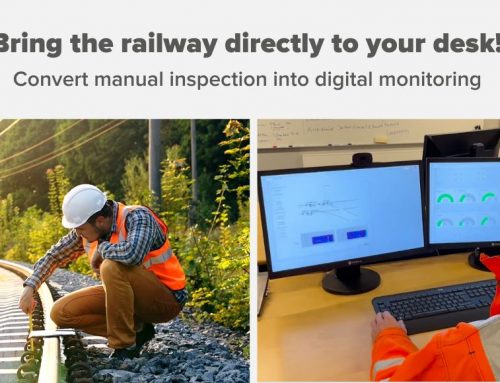
Our Digital Service Platform is a great example of a monitoring solution that is cost -and time-efficient. It is an excellent way to increase understanding of the rail infrastructure whilst automating manual processes.
Below is an overview of some of the differences between manual monitoring and automatic monitoring:

As our Digital Service Platform monitors different parameters at once, it can provide an even deeper insight into the overall condition of the infrastructure. With the information provided by the installed sensors, the Digital Service Platform can analyze and diagnose various irregularities. With the correct effort, this can improve the health of the infrastructure and/or help to prevent malfunctions.